
Pool and Hot Tub Electrical Wiring in Columbia Terrace, Peoria – The Hidden Danger in Your Backyard
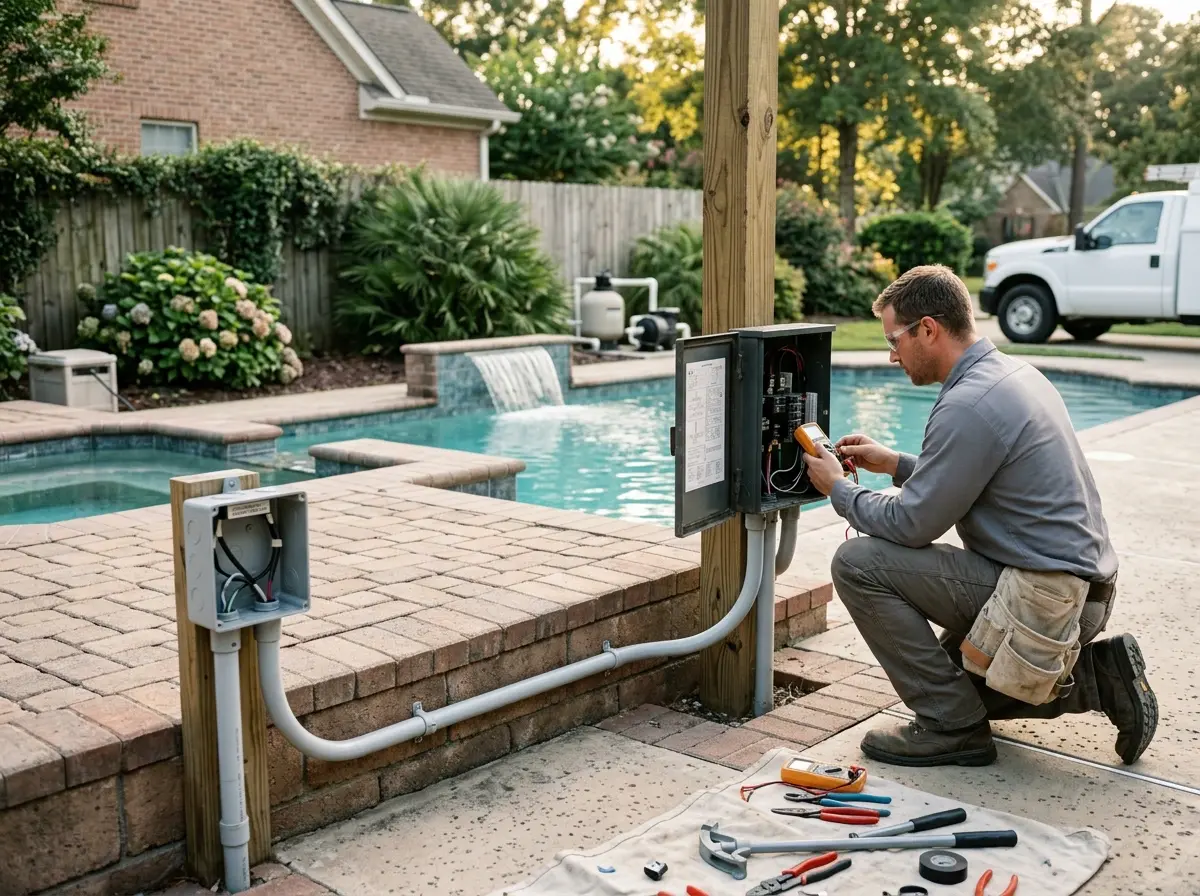
Imagine this. You step out of your pool on a hot summer day in Columbia Terrace or Peoria. You reach for the metal ladder to climb out, and you feel a tingling sensation. A slight shock. You think it's just static electricity. But it's not. It's a sign that your pool's electrical system is failing. The bonding wire – a buried copper grid designed to keep every metal component at the same electrical potential – may be broken, corroded, or never installed at all. Without proper bonding, stray voltage from your pool pump, landscape lighting, or even a neighbor's home can enter the water. The result is a condition called "step potential" or "voltage gradient" – and it can paralyze a swimmer, making it impossible to move or call for help. This is not a remote possibility. The Consumer Product Safety Commission has documented dozens of electrocutions and hundreds of non‑fatal shocks in pools and hot tubs over the past decade. Most could have been prevented by proper NEC Article 680 electrical work. Our licensed electrical company specializes in pool electrical installation and hot tub electrical installation. We do not just connect wires. We install complete safety systems: pool bonding and grounding grids, GFCI protection for every pump light and outlet within 20 feet of water, weatherproof pool electrical disconnects within sight of equipment, and corrosion‑resistant junction boxes. We also handle electrical permits and mandatory inspections. When we finish a pool or hot tub project in Columbia Terrace or Peoria, you get a signed inspection card that proves your backyard is safe – not just functional.
The Anatomy of a Safe Pool Electrical System – What We Install (And What Handymen Leave Out)
Most residential electricians can wire a pool pump. But wiring a pump is only 10% of what a proper pool electrical system requires. Below is the complete scope of what we install for homeowners in Columbia Terrace and Peoria – including the critical safety components that handymen almost always miss.
- Pool bonding grid – a continuous loop of #8 bare copper wire buried 4‑6 inches deep around the pool, attached to every metal component: ladder, handrail, diving board stand, pump motor, heater, light niche, and reinforcing rebar. This keeps everything at identical voltage. Time: 4‑7 hours for a typical in‑ground pool.
- GFCI protection – every pool pump (120V or 240V), every underwater light, and every outlet within 20 feet of the pool must be GFCI‑protected. We use GFCI breakers or deadfronts. Time: 30‑60 minutes per circuit.
- Pool electrical disconnect – a weatherproof pullout switch within sight of the pool equipment (max 50 feet) and at least 5 feet from the water's edge. Required for emergency shutdown. Time: 1.5‑2.5 hours.
- Pool light wiring – low‑voltage underwater lights (12V) with a transformer and GFCI protection on the line side. Requires a watertight niche and gasket seal. Time: 2‑4 hours.
- Salt water chlorinator wiring – corrosive environments require special stainless steel components and extra sealing. We use dielectric unions and corrosion‑proof junction boxes. Time: 1.5‑2 hours.
- Heat pump or gas heater hookup – 240V circuit sized per manufacturer specs (often 30‑50A) with a disconnect within sight. Time: 2.5‑3.5 hours.
Real Pool Electrical Failures We Have Found in Columbia Terrace and Peoria – And What It Took to Fix Them
We have been called to investigate shocks, tripping breakers, and failed inspections across Columbia Terrace and Peoria. Below are real examples of what we found – and how long it took to make the pool safe again.
- Homeowner felt a tingle when touching the pool ladder. Our bonding test showed infinite resistance between the ladder and the pump motor (should be under 1 ohm). The bonding wire had been cut by a lawn aerator years ago. Fix: Expose the broken wire, install new splice with split‑bolt connector, bury in waterproof epoxy. Time: 3 hours.
- Pool light worked for 10 minutes then tripped the GFCI. The light niche had a pinhole leak, allowing water into the fixture. Fix: Drain pool below light level, remove fixture, replace gasket and seal. Time: 2 hours plus drain/fill time.
- Pool pump breaker tripped randomly every few days. A thermal camera showed the wire was undersized (#14 on a 20A pump). The wire was overheating and tripping the breaker thermally, not magnetically. Fix: Replace entire run with #12 wire. Time: 3 hours.
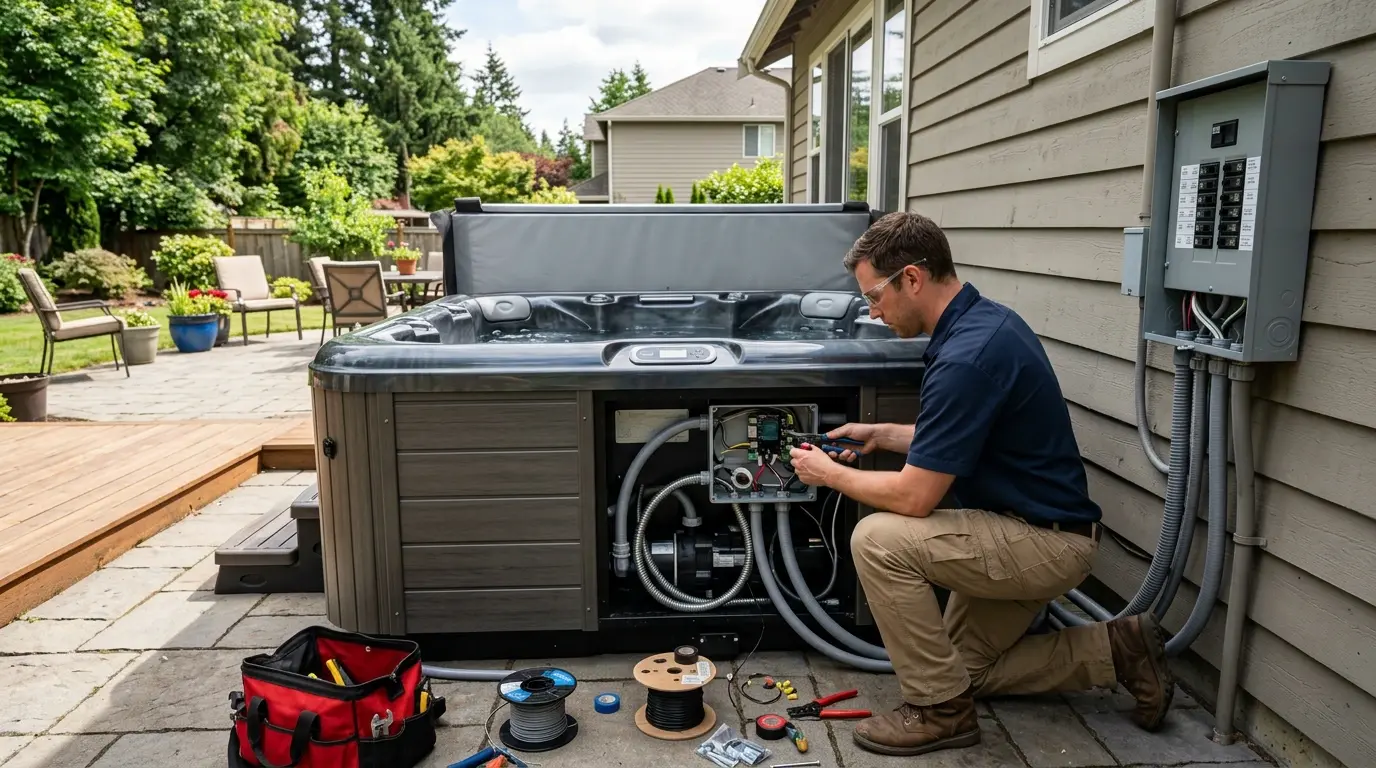
- Hot tub kept tripping the breaker immediately after startup. The heater element had cracked and was shorting to ground. Fix: Replace heater element. Time: 1.5 hours.
- New pool build failed electrical inspection. The electrician had bonded the pool but forgot to bond the rebar in the concrete deck. Inspector required exposed rebar to be bonded. Fix: Chip out concrete at four points, attach bonding clamps to rebar, connect to bonding grid. Time: 4 hours.
Most pool electrical repairs take 2‑5 hours. A full bonding grid installation for a new pool takes 4‑7 hours. We always provide a written quote before starting, and we include a bonding continuity test report in our final documentation.
Beyond repairs, we also offer pre‑season safety inspections. Before you open your pool each spring, we test every GFCI, measure bonding continuity (must be under 1 ohm), inspect disconnects for corrosion, and verify pool light seals. This 2‑hour inspection costs $199 and includes a written safety certificate. Many homeowners in Columbia Terrace and Peoria require this inspection before hosting large pool parties or renting out their home.
Why Pool Electrical Work Requires NEC Article 680 Expertise – Bonding, Permits, and Life Safety
Most residential electricians have never read NEC Article 680. They know how to wire a pump and install a breaker. But they do not know that the bonding grid must be tested with a low‑resistance ohmmeter (not a standard multimeter). They do not know that the bonding wire must be attached to the rebar in the pool shell before concrete is poured – a step that cannot be retrofitted without breaking concrete. They do not know that a pool light niche requires a bonding lug inside the wet area. They do not know that the disconnect must be at least 5 feet from the water – measured horizontally, not diagonally. Our team knows these details because we specialize in aquatic electrical work. We study NEC 680 updates every code cycle. We attend manufacturer training for pool equipment. We carry specialized tools: a bonding resistance tester (which uses higher current than a multimeter to get accurate readings), a thermal camera to find overheating connections, and a GFCI tester that works on 240V circuits. When we finish a pool electrical job in Columbia Terrace or Peoria, it passes inspection the first time – because we have already inspected it ourselves against every NEC 680 requirement.
We also manage the complex permit process. Pool electrical work typically requires two inspections: a rough‑in inspection before concrete is poured (to verify bonding and conduit placement) and a final inspection after equipment is installed. We schedule both, meet the inspector on‑site, and correct any issues immediately. You receive a signed inspection card that stays with your home's records. This documentation is invaluable when you sell your home – buyers and their home inspectors will look for proof that the pool electrical system was installed by a licensed professional who followed NEC 680. Without it, a sale can be delayed or canceled.
Finally, we educate homeowners on simple safety checks. We show you how to test your GFCI breakers monthly (press the TEST button – the breaker should trip). We show you how to inspect your pool light for water intrusion. We remind you to keep the area around the pool equipment clear and dry. These few minutes of prevention can save a life.
Ready to Make Your Pool or Hot Tub Safe in Columbia Terrace, Peoria? Call the NEC Article 680 Specialists Today
Do not wait for a tingle or a shock. Call us today to schedule a professional pool and hot tub electrical inspection, new installation, or repair. We serve homeowners across Columbia Terrace and Peoria with licensed, insured, and NEC Article 680‑compliant work. Free consultation, upfront pricing, and a safety certificate with every job. Contact us now – because water and electricity don't mix, but we make sure they stay separate.